
Butternut Squash Pasta is my go‑to comfort dish when the evenings grow cool and I crave something warm, velvety, and packed with autumn flavor. I love how the natural sweetness of roasted butternut squash blends with the richness of Parmesan, creating a sauce that clings lovingly to each strand of pasta. In this guide I’ll walk you through every step, from selecting the perfect squash and achieving a caramelized roast, to perfecting the silky puree and tossing it with al dente noodles. You’ll also discover tips for balancing seasoning, adjusting texture, and serving the dish with simple. More.
Table of Contents
Why You’ll Love This Butternut Squash Pasta
There’s a reason this recipe dominates autumn searches across the United States. The combination of sweet, caramelized squash and a buttery Parmesan‑infused sauce creates a depth of flavor that feels both indulgent and wholesome. Because the sauce is made from the squash itself, you avoid heavy cream while still achieving a luxuriously smooth texture. This makes the dish lighter on the palate but still satisfying enough for a family dinner or a cozy night in.
Beyond flavor, the recipe is incredibly adaptable. Whether you serve it as a main course or pair it with a simple salad, the pasta holds its own. The natural orange hue of the sauce also adds a visual pop to the table, making it perfect for photo‑friendly meals that look as good as they taste. Finally, the ingredients are pantry‑friendly; most households already have olive oil, Parmesan, and basic seasonings on hand, which reduces the need for a last‑minute grocery run.
Equipment You’ll Need
- Large baking sheet – for roasting the squash cubes evenly.
- Chef’s knife and cutting board – to peel and cube the squash safely.
- Large pot – for boiling the pasta.
- Large skillet or sauté pan – to combine the roasted squash with broth and finish the sauce.
- Immersion blender or countertop blender – essential for achieving a silky pureed sauce.
- Measuring cups and spoons – for precise broth and oil amounts.
- Serving bowls or plates – to present the finished pasta beautifully.
Having the right tools not only speeds up the cooking process but also ensures consistent results. For example, a wide‑rimmed skillet allows the sauce to reduce evenly, while an immersion blender prevents the mess of transferring hot puree to a traditional blender.
Ingredients for Butternut Squash Pasta
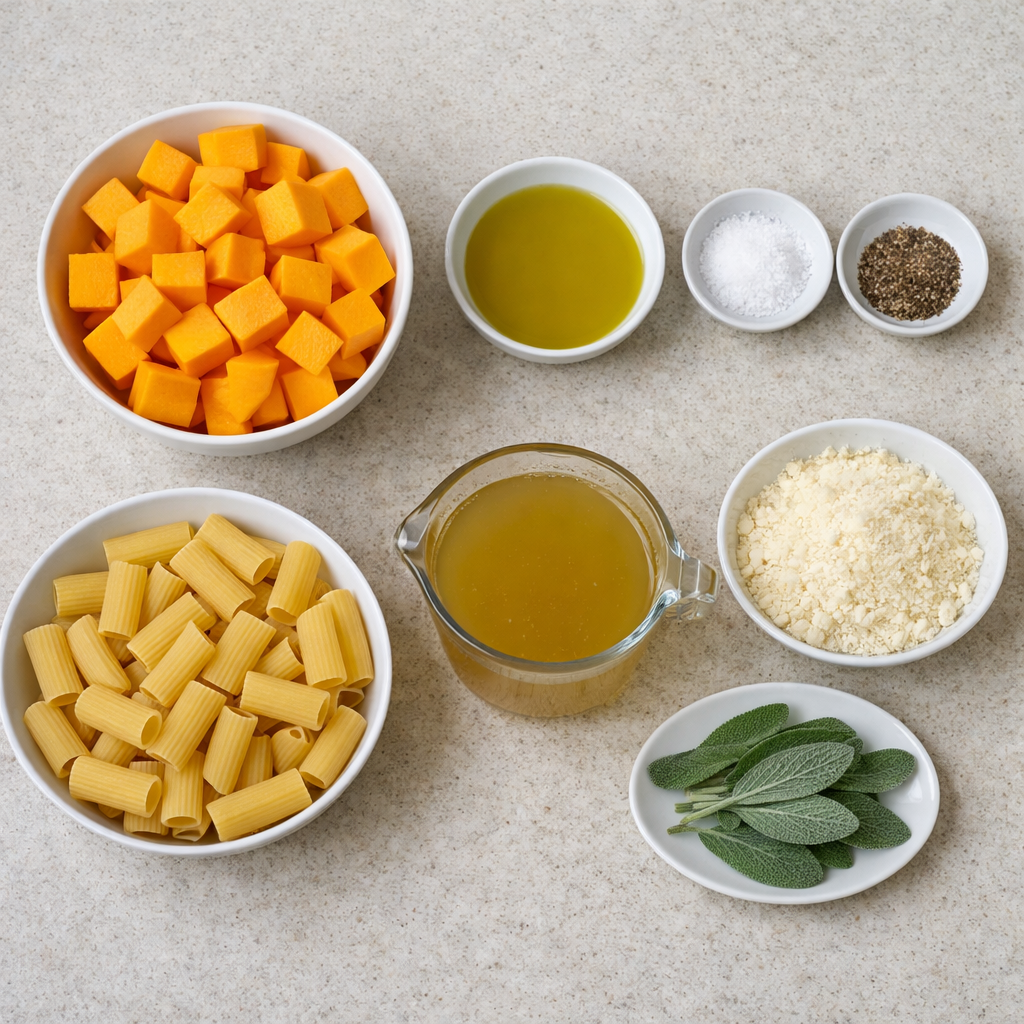
- 1 medium butternut squash, peeled and cubed
- 2 tablespoons olive oil
- Salt and pepper to taste
- 12 ounces pasta of your choice (penne, rigatoni, or fettuccine work well)
- 1 cup vegetable broth
- 1/2 cup grated Parmesan cheese
- Fresh sage leaves for garnish
Ingredient Substitutions
If you don’t have vegetable broth on hand, low‑sodium chicken broth works just as well and adds a subtle depth. For a dairy‑free version, replace Parmesan with a high‑quality nutritional yeast mixed with a touch of olive oil to mimic the creamy umami flavor.
How to Make Butternut Squash Pasta (Step‑By‑Step)
Step 1: Preheat the Oven
Set your oven to 400°F (200°C). This temperature ensures the squash cubes caramelize without drying out, developing the sweet, nutty notes that define the sauce.
Step 2: Prepare the Squash
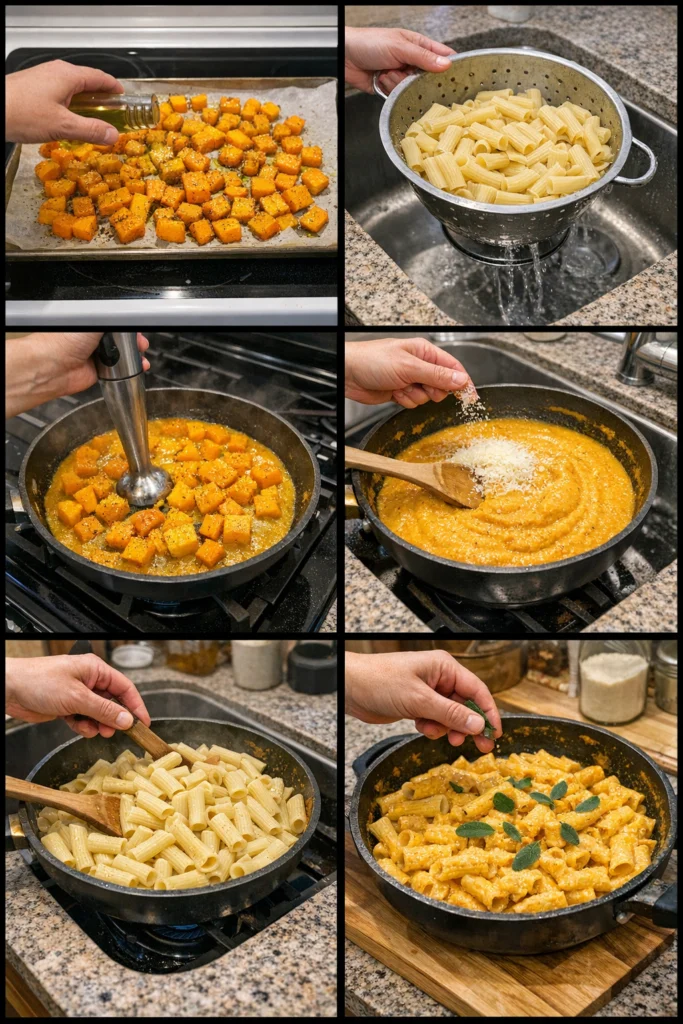
On a large baking sheet, toss the peeled and cubed squash with olive oil, salt, and pepper. Spread the cubes in a single layer to promote even roasting.
Step 3: Roast the Squash
Place the sheet in the preheated oven and roast for 25‑30 minutes, stirring once halfway through. The squash should be tender when pierced with a fork and have golden brown edges.
Step 4: Cook the Pasta
While the squash roasts, bring a pot of salted water to a boil. Cook the pasta according to the package instructions until al dente. Reserve a cup of pasta water before draining.
Step 5: Blend the Sauce
Transfer the roasted squash to a large skillet, add the vegetable broth, and use an immersion blender to puree until completely smooth. If the sauce is too thick, thin it with a splash of the reserved pasta water.
Step 6: Finish the Sauce
Stir in the grated Parmesan cheese until it melts, creating a glossy, velvety texture. Taste and adjust seasoning with additional salt or pepper if needed.
Step 7: Combine Pasta and Sauce
Add the cooked pasta to the skillet, tossing gently to coat each piece. If the sauce needs loosening, add a bit more pasta water until it reaches your desired consistency.
Step 8: Serve and Garnish
Plate the pasta, garnish with fresh sage leaves, and serve immediately while hot. The sage adds an earthy aroma that complements the sweet squash beautifully.
Variations and Twists
- Spicy Kick: Add a pinch of red‑pepper flakes to the sauce for subtle heat.
- Protein Boost: Stir in cooked, shredded smoked beef for a heartier, non‑vegetarian version.
- Herb Swap: Replace sage with fresh thyme or rosemary for a different aromatic profile.
- Nutty Crunch: Sprinkle toasted pine nuts or chopped walnuts on top for texture.
- Cheese Alternatives: Use Pecorino Romano instead of Parmesan for a sharper bite.
What to Serve With Butternut Squash Pasta
A balanced meal pairs the creamy pasta with contrasting sides. Consider a crisp arugula salad tossed with lemon vinaigrette, a slice of warm crusty bread brushed with butter, or a simple roasted beet side. For beverages, a chilled glass of grape juice or a light sparkling water with a splash of lemon complements the dish without overwhelming the palate.
Pro Tips for Perfect Results
- Roast Until Caramelized: The deeper the browning, the richer the flavor. Don’t rush this step.
- Reserve Pasta Water: The starchy water helps bind the sauce to the pasta, creating a silky coat.
- Use Fresh Parmesan: Freshly grated cheese melts better and adds authentic flavor.
- Season in Layers: Salt the squash before roasting and taste the sauce before final seasoning.
- Blend While Warm: Hot squash purees more smoothly, reducing the need for extra liquid.
Common Mistakes to Avoid
- Over‑cooking the Squash: Soft, mushy squash loses its caramelized edge, resulting in a flat sauce.
- Skipping the Pasta Water: Without the starch‑rich water, the sauce may separate or cling poorly.
- Using Low‑Quality Parmesan: Cheap cheese can make the sauce grainy and less flavorful.
- Undercooking the Pasta: Al dente texture is crucial; overcooked noodles become gummy when tossed with the sauce.
- Neglecting Fresh Herbs: Fresh sage added at the end preserves its bright aroma; dried sage can become bitter.
Storage, Reheating & Make‑Ahead Tips
Store leftovers in an airtight container in the refrigerator for up to three days. To reheat, gently warm the pasta in a skillet over medium heat, adding a splash of broth or water to restore creaminess. For make‑ahead meals, freeze the roasted squash cubes separately; they retain flavor and can be blended with fresh broth when needed. The cooked pasta itself freezes well for up to two months—just thaw and combine with freshly prepared sauce.
Frequently Asked Questions
Can I use a different type of squash? Yes, acorn or kabocha squash work, but butternut provides the smoothest texture and sweetest flavor.
Is this recipe gluten‑free? Substitute gluten‑free pasta such as rice or corn‑based varieties for a completely gluten‑free version.
How do I make the sauce dairy‑free? Replace Parmesan with nutritional yeast and a drizzle of olive oil; the sauce will stay creamy and umami‑rich.
Can I add vegetables? Absolutely—steamed broccoli, sautéed mushrooms, or roasted red peppers add color and nutrition.
Conclusion
Butternut Squash Pasta delivers comfort, flavor, and versatility in one elegant bowl. By mastering the roasting, blending, and seasoning steps, you’ll create a dish that feels luxurious yet approachable, perfect for weeknight dinners or special gatherings. Enjoy the warm, creamy goodness and feel free to experiment with the suggested variations for a personalized touch.
Print
Butternut Squash Pasta: Easy Creamy Autumn Dinner for 4
- Total Time: 45 minutes
- Yield: 4 servings 1x
- Diet: Vegetarian
Description
A creamy, vegetarian butternut squash pasta that blends roasted squash, Parmesan, and olive oil into a silky sauce. Perfect for a quick autumn dinner, this easy recipe serves four, offers balanced nutrition, and can be customized with herbs, spices, or protein additions for a heartier meal. Ideal for weeknight cooking, the dish delivers comforting flavor and a vibrant orange hue that looks as good as it tastes. Serve with sage garnish for an extra aromatic touch.
Ingredients
- 1 medium butternut squash, peeled and cubed
- 2 tablespoons olive oil
- Salt and pepper to taste
- 12 ounces pasta of your choice
- 1 cup vegetable broth
- 1/2 cup grated Parmesan cheese
- Fresh sage leaves for garnish
Instructions
- Preheat oven to 400°F (200°C). Toss squash cubes with olive oil, salt, and pepper; spread on a baking sheet.
- Roast for 25‑30 minutes until tender and caramelized.
- Cook pasta in salted water until al dente; reserve 1 cup pasta water.
- In a large skillet combine roasted squash and vegetable broth; blend with immersion blender until smooth.
- Stir in Parmesan cheese until melted; adjust seasoning.
- Toss cooked pasta with sauce, adding reserved pasta water as needed for desired consistency.
- Garnish with fresh sage leaves and serve hot.
Notes
- For a dairy‑free version
- replace Parmesan with nutritional yeast. Add a pinch of red‑pepper flakes for heat or smoked beef for extra protein.
- Prep Time: 15 minutes
- Cook Time: 30 minutes
- Category: Vegetarian
- Method: Baking, Boiling, Blending
- Cuisine: Italian
Nutrition
- Serving Size: 1 cup
- Calories: 450
- Sugar: 6 g
- Sodium: 350 mg
- Fat: 12 g
- Saturated Fat: 4 g
- Unsaturated Fat: 6 g
- Trans Fat: 0 g
- Carbohydrates: 65 g
- Fiber: 5 g
- Protein: 15 g
- Cholesterol: 10 mg
Keywords: Butternut Squash Pasta, easy butternut squash pasta, creamy pasta recipe, quick autumn dinner, vegetarian pasta ideas, fall comfort food, how to make squash pasta, simple pasta sauce, pasta with roasted vegetables